Pinterest® Research · Pinfluence Discover
Are There Really Banned Words on Pinterest®? We Tested 11,761 of Them
By Pinfluencing.com · Last updated
Almost none of the words you have been told to avoid make any difference. ‘Free’ ranks exactly like everything else. What does cost positions is anything that makes a pin read like an advert or a listing, plus one thing nobody warns you about.
We took 283 words and phrases that circulate on ‘banned words’ and ‘spam trigger’ lists, then every word that appears on at least 2,000 ranking pins (11,761 words), and checked three things for each: do pins containing it rank worse than comparable pins, do they reach the top 10 less often, and do they make it into Pinterest® search results at all.
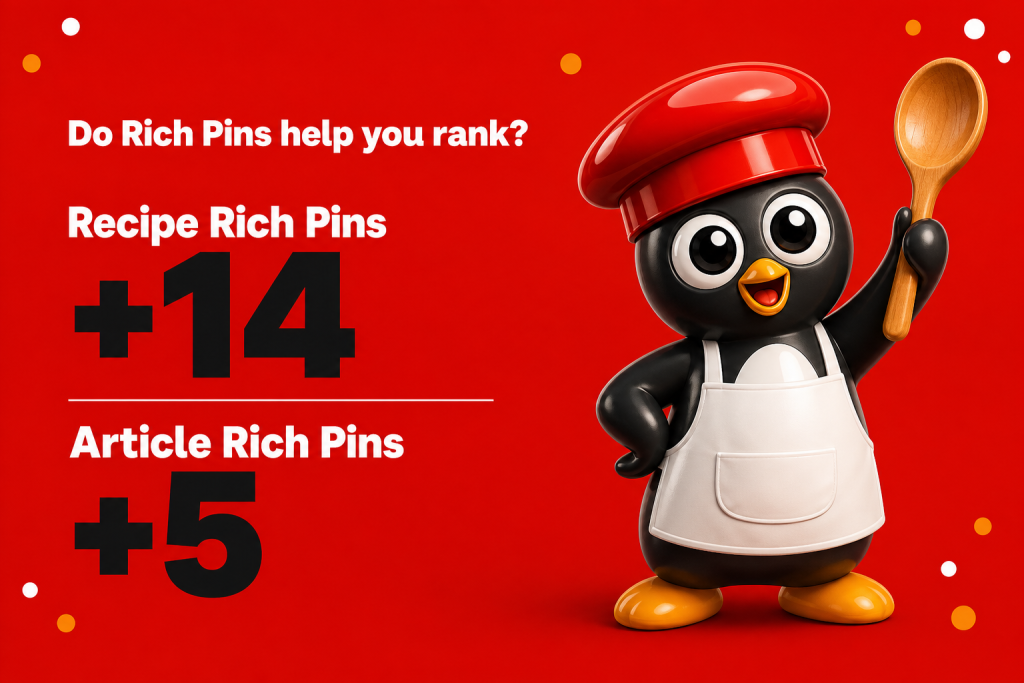
Pins carrying at least one of the 146 folklore words land within 0.1 of a position of comparable pins. ‘Free’ is within a tenth of a position across 1.4 million search appearances. ‘Sponsored’ sits 12 positions lower. ‘Affiliate’ sits nowhere lower at all. And food pins that paste the recipe card into the description sit 9 to 17 positions lower than food pins that do not, while recipe Rich Pins, which carry the same recipe data properly, rank 30 positions higher.
Still rewriting pins to dodge the word ‘free’?
The ‘banned words’ list did not survive 61 million search results. What did: the phrases people actually type. Search your niche in Pinfluence Discover and see the real phrases, plus the pins holding the top spots for each. Free account, 7 days of Pro included, no credit card.
See What Your Niche SearchesKey findings
- The ‘banned words’ list is mostly folklore. Pins containing at least one of 146 words creators are told to avoid (1.76 million pins in our sample) land within 0.1 of a position of comparable pins and reach the top 10 at 1.09 times the expected rate. Seven of eight word clusters sit within a quarter of a position of pins without them.
- ‘Free’ does nothing. 558,049 pins, 1.44 million search appearances, and a difference of 0.06 positions from comparable pins. It is the best-tested word in the study and the most harmless.
- The weight-loss words are not suppressed in search. ‘Weight loss’ sits 1.8 positions lower than comparable pins but reaches the top 10 at 1.10 times the expected rate; ‘diet’ is flat; ‘keto’ sits 3.2 positions higher; ‘belly fat’ is within a position. Pinterest’s 2021 rule on weight-loss advertising is an ads policy; it does not show up in organic ranking.
- The words that cost positions describe an advert. ‘Sponsored’ sits 12.5 positions lower and reaches the top 10 at 0.67 times the expected rate. ‘Link in bio’ 8.2 lower and 0.71 times. ‘Comment below’ 10 lower. ‘Order now’ 8 lower. ‘Giveaway’ 6.7 lower. ‘Follow me’ 6.3 lower.
- ‘Sponsored’ hurts. ‘Affiliate’ does not. A ‘sponsored’ disclosure in the description tracked 12.5 positions lower across 23,000 appearances. An ‘affiliate’ disclosure in the description tracked 0.2 positions higher across 114,000.
- Platform names in the text cost positions. ‘YouTube’ 12 lower, ‘Etsy’ 7 lower, ‘eBay’ 6.3 lower, ‘Twitter’ 5.7 lower, ‘Instagram’ 5.1 lower, ‘Amazon’ 4.8 lower. ‘Pinterest’ itself: 3 positions higher.
- The recipe-card trap, and the Rich Pin fix. Food pins whose description contains the measurements (‘servings’, ‘tsp’, ‘tbsp’, ‘preheat’, ‘granulated’) sit 9 to 17 positions lower than comparable food pins and reach the top 10 at roughly half the expected rate. They are not Rich Pins: about 1 in 500 carries Rich Pin data. Recipe Rich Pins, which carry the same information the proper way, rank 30 positions higher and reach the top 10 at 1.8 times the expected rate.
- The only words that appear to be kept out of search are the ones in Pinterest’s Community Guidelines. ‘Vape’ appears in search results at a tenth of the rate it appears in pins at large; ‘weapons’, ‘cannabis’, ‘weed’, ‘replica’ and ‘knife’ at a quarter to two fifths. The few pins that get in rank fine. That is Pinterest doing what its guidelines say it does.
- It does not hit small accounts harder. Across every cluster, accounts under 1,000 followers see the same or smaller effects than accounts over 10,000.
What this means for you
If you have a list of words you avoid in titles and descriptions, you can probably throw most of it away. The words themselves are not the problem. ‘Free’, ‘secret’, ‘amazing’, ‘guaranteed’, ‘click’, ‘diet’: pins that use them land exactly where pins that do not use them land, once you compare like with like.
What the data does show is that Pinterest search is not fond of pins that read like adverts or listings. ‘Sponsored’, ‘order now’, ‘link in bio’, a phone number, a platform name, a stock-file format: each of those marks a pin as something other than an idea someone wants to save, and each tracks a real gap. The word is the symptom. Taking ‘sponsored’ out of an advert does not stop it being an advert.
A note on how to read the numbers. In every table below, a ‘ranking change’ is measured against comparable pins (same niche, same search-volume band). A positive number means those pins sit higher in search, a negative number means they sit lower, the same way a ranking change reads in Pinfluence Discover. ‘Top-10 reach’ is how often they reach the top 10 relative to what their niche and volume mix would predict; 1.00 means no difference, higher is better.
The one genuinely new thing here is about recipes. The biggest niche on Pinterest has a habit of pasting the whole recipe card into the pin description, and those pins rank well behind comparable food pins. Rich Pins, which pull the recipe data from your site and display it properly, rank well ahead. So keep Rich Pins on, put the recipe on your site, and put the dish, the occasion and the phrase people search in the description, which is the lever we measured in where to put your keyword on Pinterest.
And if you have seen a sudden drop and suspect a word did it, it almost certainly did not. The pattern that looks like a gate in our data applies to a short list of regulated topics, not to marketing vocabulary. For a sudden loss of reach, our distribution limits study is the place to start.
The 146 words everyone warns you about
We grouped the folklore list into eight clusters and compared pins containing each word with other pins in the same niche and the same search-volume band.
| Cluster | Pins | Ranking change | Top-10 reach |
|---|---|---|---|
| Commerce (sale, coupon, shop now, sponsored) | 238,729 | −3.1 | 1.02 |
| Money (make money, side hustle, crypto) | 13,570 | −0.6 | 1.04 |
| Regulated goods (alcohol, casino, gun, vape) | 50,832 | −0.3 | 1.32 |
| Suggestive wording (sexy, nude, lingerie, hot) | 62,208 | 0.0 | 1.15 |
| Health and body (weight loss, diet, keto, detox) | 97,515 | +0.1 | 1.05 |
| Engagement bait (link in bio, follow me, save this pin) | 207,306 | +0.1 | 1.15 |
| Urgency and sales (free, giveaway, limited time) | 801,194 | +0.1 | 1.09 |
| Claims (amazing, guaranteed, viral, ultimate) | 534,706 | +0.1 | 1.08 |
Seven of the eight clusters sit within a quarter of a position of comparable pins, and most reach the top 10 slightly more often than expected, not less. Commerce is the one cluster with a gap, and it is three positions: small, consistent, and best read as ‘shop-listing pins rank a little lower’ rather than ‘these words are banned’. The suggestive-wording cluster is everyday fashion and beauty vocabulary (‘nude’ is mostly a shade of lipstick or heels); it is not adult content, which is a different story and comes up in the visibility section below.
The famous ones that turn out to be fine
| Word | Appearances | Ranking change | Top-10 reach |
|---|---|---|---|
| free | 1,438,360 | +0.1 | 1.08 |
| ultimate | 542,072 | +3.3 | 1.17 |
| save this pin | 421,790 | +3.7 | 1.35 |
| click | 403,768 | +1.8 | 1.17 |
| amazing | 275,440 | +1.3 | 1.08 |
| instantly | 164,018 | 0.0 | 1.18 |
| secret | 122,428 | −0.7 | 0.99 |
| affiliate | 114,792 | +0.2 | 1.14 |
| hacks | 106,605 | +1.6 | 1.13 |
| cheap | 91,166 | +3.7 | 1.38 |
| nude | 70,544 | +2.9 | 1.28 |
| hack | 62,334 | +1.1 | 1.06 |
| keto | 61,764 | +3.2 | 0.95 |
| diet | 61,244 | −0.1 | 1.11 |
| guaranteed | 54,015 | −0.2 | 1.07 |
| weight loss | 45,203 | −1.8 | 1.10 |
| alcohol | 32,253 | −0.1 | 1.46 |
| click here | 25,922 | −1.0 | 1.16 |
| detox | 19,118 | +2.0 | 1.03 |
| belly fat | 12,892 | −0.8 | 1.02 |
| lose weight | 9,181 | −2.5 | 0.86 |
| work from home | 9,397 | +4.5 | 1.24 |
‘Free’ is the word creators most often tell each other to avoid, and it is the most thoroughly tested word in this study: 1.4 million appearances, 0.06 positions from comparable pins. ‘Save this pin’, ‘ultimate’ and ‘cheap’ rank higher than comparable pins, which fits what wins search in general: list-style and how-to phrasing. ‘Hacks’, ‘keto’, ‘detox’ and ‘work from home’ rank higher too. Nothing on this table behaves like a penalty.
One nuance worth knowing: ‘free’ moves with the niche. In DIY and crafts, education and finance, pins with ‘free’ rank three to five positions higher (free printables, worksheets, templates). In art and design they rank five positions lower (free stock downloads). That is the kind of pin, not the word.
The words that do cost positions
Out of the whole folklore list, these are the words that cleared the bar we set for ‘this hurts’: roughly nine positions lower than comparable pins, or 0.8 times the expected top-10 reach, which is the worst 5% of all 11,761 words we scored.
| Word or phrase | Appearances | Ranking change | Top-10 reach |
|---|---|---|---|
| sponsored | 23,378 | −12.6 | 0.67 |
| comment below | 8,693 | −10.0 | 0.74 |
| earn money | 1,329 | −9.2 | 0.60 |
| promo code | 1,513 | −8.9 | 0.88 |
| burn fat | 6,956 | −8.3 | 0.78 |
| link in bio | 90,680 | −8.2 | 0.71 |
| order now | 10,441 | −8.1 | 0.85 |
| make money online | 2,009 | −7.7 | 0.68 |
| deals | 17,919 | −7.6 | 0.88 |
| etsy shop | 16,674 | −6.8 | 0.82 |
| giveaway | 6,654 | −6.7 | 0.83 |
| follow me | 49,427 | −6.2 | 0.86 |
| follow us | 29,660 | −6.2 | 0.80 |
| ad | 153,838 | −5.3 | 0.93 |
| shop now | 36,001 | −5.1 | 0.91 |
| coupon | 13,566 | −3.7 | 0.66 |
Read down the list and a pattern appears. Every one of these phrases does one of two jobs: it tells the reader this is an advert (‘sponsored’, ‘ad’, ‘promo code’, ‘order now’, ‘shop now’, ‘deals’), or it asks the reader to do something for the pinner (‘comment below’, ‘follow me’, ‘follow us’, ‘link in bio’, ‘giveaway’). ‘Link in bio’ is the single most common one at 90,000 appearances, and it is also a fingerprint of pins auto-published from Instagram, which we covered in where pins link.
The cleanest comparison in the whole study is ‘sponsored’ against ‘affiliate’. Both are disclosures. Both usually sit in the description. A ‘sponsored’ disclosure tracked 12.5 positions lower than comparable pins across 23,000 appearances; an ‘affiliate’ disclosure tracked 0.2 positions higher across 114,000. Whatever is being measured, it is not the act of disclosing.
See what the pins winning your keyword actually say.
Search any phrase in Pinfluence Discover and read the titles and descriptions of the pins holding the top spots, plus the accounts behind them. Copy how the winners write, not a list of words to avoid. Free account, 7 days of Pro included, no credit card.
Show Me the Top PinsBeyond the list: every word Pinterest users write
A list of 146 words can only confirm or deny the folklore. So we also scored every word that appears on at least 2,000 ranking pins in our sample, 11,761 words in all, on the same three tests. The words that rank lowest are not on any creator’s list.
Platforms and stock sites. ‘Spreadshirt’ 42 positions lower, ‘Freepik’ 23 lower, ‘Polyvore’ 15, ‘Pngtree’ 15, the LTK affiliate tags (‘liketk’, ‘liketkit’, ‘shopltk’) 14 to 18 lower, ‘Depop’ 14, ‘Poshmark’ and ‘shopmycloset’ 13, plus file formats (‘psd’ 14 lower, ‘dxf’ 16, ‘svg’ 8.6, ‘vector’ 11) and ‘free download’ 8.1 lower. Among the bigger platforms: ‘YouTube’ 12 lower, ‘Etsy’ 7 lower (231,000 pins), ‘Instagram’ 5.1 lower (331,000 pins), ‘Amazon’ 4.8 lower. ‘Pinterest’ in the text ranks three positions higher.
| Word in description | Appearances | Ranking change | Top-10 reach |
|---|---|---|---|
| servings | 31,611 | −16.7 | 0.57 |
| teaspoons | 6,564 | −14.6 | 0.57 |
| unsweetened | 5,493 | −12.9 | 0.53 |
| granulated | 14,062 | −12.7 | 0.50 |
| tsp | 62,775 | −11.2 | 0.58 |
| tbsp | 63,294 | −10.6 | 0.60 |
| unsalted | 17,341 | −10.4 | 0.54 |
| tablespoons | 21,425 | −9.3 | 0.52 |
| preheat | 24,922 | −8.8 | 0.56 |
The recipe card. This is the finding we did not expect. Food pins whose description carries the measurements and the method sit 9 to 17 positions lower than comparable food pins and reach the top 10 at roughly half the expected rate. It is not the length of the description: long food descriptions without recipe words rank fine (300 to 600 characters, 3 positions higher). It is the recipe card itself, which crowds out the phrase someone would actually search with ‘tsp’, ‘tbsp’ and ‘preheat’. Our description length study found the same shape from the other direction.
The obvious question is whether these are Rich Pins, since Rich Pins pull recipe data from your site. They are not. About 1 in 500 of the recipe-card pins carries Rich Pin data, against nearly 1 in 100 of other food pins; these are ordinary pins with the card pasted into the description by hand or by a plugin. Rich Pins go the other way entirely.
| Kind of food pin | Appearances | Ranking change | Top-10 reach |
|---|---|---|---|
| Plain pin, no recipe words in description | 4,028,297 | −1.6 | 1.01 |
| Plain pin, recipe card in description | 85,388 | −11.6 | 0.61 |
| Article Rich Pin (a blog post with recipe data on the page) | 21,797 | +20.7 | 1.62 |
| Recipe Rich Pin | 42,582 | +30.5 | 1.80 |
A recipe Rich Pin ranks 30 positions higher than a comparable food pin and reaches the top 10 at 1.8 times the expected rate; across every niche, article, recipe and product Rich Pins rank 21 to 31 positions higher. Part of that gap is simply that Rich Pins come from real websites with proper page data (pins from the same kind of source without a Rich Pin block still rank 16 positions higher), and we are looking at Rich Pins on their own in a separate study. So the advice is not ‘keep the recipe off Pinterest’. It is: let Rich Pins carry the recipe, and use the description for the dish, the occasion and the words people search.
Pins not written in English. German, French, Indonesian and Portuguese function words (‘untuk’, ‘dengan’, ‘offre’, ‘enthalten’, ‘pedido’) sit 13 to 22 positions lower than comparable pins. That is expected rather than a penalty: our index is the English-language version of Pinterest search, so a pin written in another language is competing for English searches. It is worth knowing if you pin in two languages from one account, and nothing more than that.
At the other end, the words that rank highest are specific, searchable nouns: ‘stardew’ 50 positions higher, ‘sims’ 45, ‘sonic’ 42, ‘snoopy’ 27, ‘shrimp’ 23. Generic marketing words do nothing in either direction; a thing people are actually looking for does a lot.
The words that rarely reach search at all
Ranking only tells you about pins that got in. To see whether anything is being kept out, we compared how often each word appears in pins that rank in search with how often it appears in pins at large (every pin we have seen on boards, profiles and related-pin feeds). A normal word appears in search at about 0.84 times its rate in the wild; the bottom 5% of ordinary words sit below 0.49.
| Word | Visibility ratio | Ranking change once in |
|---|---|---|
| vape | 0.10 | +31 |
| onlyfans | 0.23 | +1 |
| weapons | 0.26 | +8 |
| depression | 0.29 | +23 |
| cannabis | 0.29 | +27 |
| weed | 0.30 | +7 |
| eating disorder | 0.30 | +32 |
| suicide | 0.33 | +15 |
| replica | 0.37 | −4 |
| knife | 0.43 | −3 |
| guns | 0.44 | +11 |
| cigarette | 0.49 | −1 |
| giveaway | 0.54 | −7 |
| sale | 0.54 | −4 |
| free | 0.83 | 0 |
| keto | 0.96 | +3 |
| weight loss | 1.26 | −2 |
| nude | 1.32 | +3 |
| belly fat | 1.63 | −1 |
| flat stomach | 2.31 | −3 |
This is the one place the data looks like a rulebook, and it is Pinterest’s published rulebook, not the creators’ one. Words for regulated goods (vaping, cannabis, weapons, knives, counterfeit and replica goods) and for adult services reach search at a tenth to two fifths of a normal word’s rate. So do sensitive mental-health terms (‘depression’, ‘suicide’, ‘eating disorder’), which matches Pinterest’s compassionate-search feature that routes those searches to curated resources. In every case the pattern is a gate, not a demotion: the few pins that do get in rank as high as or higher than comparable pins.
That is worth saying plainly, because it is good news. Pinterest’s Community Guidelines say it limits the distribution of content about weapons, drugs, tobacco and adult services, and that it steers sensitive searches toward support rather than ranking them. The data says it does exactly that, and only that. The marketing vocabulary creators have been warned about is not on the list.
The weight-loss words are the clearest counter-example. ‘Weight loss’ reaches search at 1.26 times a normal word’s rate, ‘belly fat’ at 1.63, ‘flat stomach’ at 2.31. Diet content is over-represented in search, not filtered. ‘Free’ sits at 0.83, which is the median for ordinary vocabulary.
Does it hurt small accounts more?
A common version of the claim is that established accounts get away with words that sink a new one. We split every cluster by the follower count of the account that published the pin. (Follower tiers compare within the same niche and volume band, as always.)
| Cluster | Under 1,000 followers | 1,000 to 10,000 | Over 10,000 |
|---|---|---|---|
| Commerce | −2.9 | −3.2 | −3.4 |
| Claims | +0.9 | +1.1 | −1.6 |
| Suggestive wording | +1.9 | +0.5 | −3.1 |
| Engagement bait | +0.1 | +0.7 | −0.1 |
| Health and body | +0.1 | −1.2 | +2.6 |
| Urgency and sales | +0.3 | +1.5 | +0.2 |
| Money | −0.7 | −1.8 | +3.2 |
| Regulated goods | −0.7 | −0.6 | −1.3 |
No. If anything the accounts with more followers carry the slightly lower numbers. ‘Link in bio’ is seven to ten positions lower in every tier; ‘free’ is within a position and a half in every tier. There is no version of this data in which the same word costs a small account more than a large one.
Spam signals that are not words
Finally we checked the things people worry about that are not vocabulary at all: capitals, punctuation, contact details.
| Feature | Appearances | Ranking change | Top-10 reach |
|---|---|---|---|
| Phone number in the description | 141,135 | −8.3 | 0.79 |
| Email address in the description | 46,908 | −7.6 | 0.89 |
| Text not in English | 831,337 | −4.2 | 0.92 |
| URL in the description | 853,444 | −3.7 | 0.86 |
| Three or more exclamation marks | 829,429 | −3.3 | 0.93 |
| Any emoji | 7,957,382 | −2.9 | 0.96 |
| Five or more hashtags | 4,931,216 | −2.0 | 0.99 |
| Title in ALL CAPS | 505,380 | −1.1 | 1.04 |
A phone number or an email address in the description is the strongest structural marker in the study, eight positions lower and a fifth off the top-10 reach, which again reads as ‘this is a business listing’. A URL costs about four. ALL CAPS, the thing most lists lead with, costs about one position and reaches the top 10 slightly more often. The small emoji and hashtag effects match our emoji study and hashtag study.
How we did this
This study uses the Pinfluencing.com research index, which organizes public information from Pinterest® search results.
These cuts cover a sample of 23.6 million ranked pins and 61.8 million search appearances drawn from about 1.3 million searches across 25 niches, indexed through early October 2026, plus 9.1 million pins seen outside search results for the visibility comparison and a 15% sample of our full pin table (153 million pins) for the Rich Pin comparison. Each row records where a pin ranked for a given search, where 1 is the top, across up to roughly 250 results per search.
- A word counts when it appears as a whole word or phrase in the title or description, lowercased and with punctuation ignored, so ‘anti-aging’ and ‘anti aging’ match the same way. We also ran the key words against alt text and board names; the field made little difference except where noted.
- Rich Pin status comes from Pinterest’s own pin metadata, which we hold for about 1 in 100 ranked pins (the ones seen through Pinterest’s related-ideas feeds). A pin we could not confirm is counted as plain, so any Rich Pins hiding in the plain group make the gap look smaller, not larger.
- ‘Comparable pins’ means pins in the same niche and the same search-volume band. Busier searches return deeper result sets, so a word that lives in busy searches would look worse than it is without that control. All ranking changes are measured within those bands and then combined, and are shown with the tool’s convention: positive means higher in search.
- The ‘bar’ for a word that hurts is the worst 5% of all 11,761 words we scored: roughly nine positions lower than comparable pins, or 0.8 times the expected top-10 reach. Smaller gaps are reported but should be read as small.
- Visibility compares search results with pins at large. Pins at large include a great many product listings that were never written for search, which pulls words like ‘sale’ and ‘buy now’ down for a reason that is not a Pinterest rule. The regulated-goods and mental-health words sit far below that effect, which is why we call those out and not the commerce words.
- Our index is the English-language version of Pinterest search, so pins written in other languages are competing for English searches here. Their lower positions describe that mismatch, not a rule about language.
- Pinterest’s own search phrases. 58 of the 146 folklore words, including ‘weight loss’, ‘vape’, ‘gun’, ‘link in bio’ and ‘sponsored’, appear in none of the 1.3 million search phrases in our index, which are the topic names Pinterest itself suggests to searchers. That tells you what Pinterest steers people toward; it is not evidence of a word filter.
- This shows a connection, not a cause, and ranking is not the same as traffic. A word like ‘sponsored’ marks a kind of pin; removing the word does not change the kind of pin. We measure where pins appear in the default logged-out view, not whether anyone clicks.
The index that scored 11,761 words is the one you can search.
Every number in this study came from the same index behind Pinfluence Discover. Point it at your own topics and see the phrases people search in your niche and the pins winning them, written the way they are actually written. Free account, 7 days of Pro included, no credit card.
Point It at My NicheFrequently asked questions
Are there banned words on Pinterest?
Not in the way the lists claim. We tested 146 words creators are told to avoid, then every word on at least 2,000 ranking pins (11,761 words). Pins containing the folklore words land within 0.1 of a position of comparable pins. The words with a real gap are the ones that mark a pin as an advert or a listing, like ‘sponsored’ (12.5 positions lower) and ‘link in bio’ (8.2 lower).
Does using the word ‘free’ hurt your pin on Pinterest?
No. Across 1.44 million search appearances, pins with ‘free’ landed within 0.06 positions of comparable pins and reached the top 10 at 1.08 times the expected rate. In DIY, education and finance, pins with ‘free’ ranked three to five positions higher.
Are weight-loss words suppressed on Pinterest?
Not in organic search. ‘Weight loss’ sat 1.8 positions lower than comparable pins but reached the top 10 at 1.10 times the expected rate, ‘diet’ was flat, and ‘keto’ ranked 3.2 positions higher. ‘Weight loss’ also appears in search results at 1.26 times a normal word’s rate. Pinterest’s 2021 restriction on weight-loss content is an advertising policy.
Which words actually lower a pin’s ranking?
Words that describe an advert or ask for engagement: ‘sponsored’ 12.5 positions lower, ‘comment below’ 10 lower, ‘link in bio’ 8.2, ‘order now’ 8.1, ‘giveaway’ 6.7, ‘follow me’ 6.3, ‘shop now’ 5.1. Platform names (‘YouTube’ 12 lower, ‘Etsy’ 7, ‘Instagram’ 5) and stock-file words (‘vector’ 11 lower, ‘svg’ 8.6, ‘clipart’ 8.6) also track lower. These are associations, not causes.
Does ‘sponsored’ or ‘affiliate’ in a description hurt?
‘Sponsored’ tracked 12.5 positions lower across 23,000 appearances. ‘Affiliate’ tracked 0.2 positions higher across 114,000. Disclosing is not the issue; the kind of pin that carries a ‘sponsored’ tag is.
Why do recipe pins with the full recipe in the description rank lower?
Food pins whose description contains measurement words like ‘tsp’, ‘tbsp’, ‘servings’ and ‘preheat’ ranked 9 to 17 positions lower than comparable food pins and reached the top 10 at about half the expected rate. These are plain pins with the card pasted in, not Rich Pins. The likeliest reason is that a pasted recipe card crowds out the phrase someone would search. Keep the recipe on your site and describe the dish in the pin.
Should I turn off Rich Pins for recipes?
No. Recipe Rich Pins, which pull the recipe data from your site and display it properly, ranked 30 positions higher than comparable food pins and reached the top 10 at 1.8 times the expected rate. Across all niches, article, recipe and product Rich Pins ranked 21 to 31 positions higher. The problem is a recipe card pasted into the description, not Rich Pin data.
Does Pinterest filter any words out of search?
Some topics, yes, and they match Pinterest’s published Community Guidelines rather than creator lists. Words for regulated goods (‘vape’, ‘weapons’, ‘cannabis’, ‘weed’, ‘replica’, ‘knife’, ‘guns’) appear in search at a tenth to two fifths of a normal word’s rate, as do sensitive mental-health terms. The pins that do get in rank as high as or higher than comparable pins. That is Pinterest enforcing its own rules, and only those.
Do ALL CAPS titles or exclamation marks hurt on Pinterest?
Barely. Titles in ALL CAPS ranked about one position lower than comparable pins and reached the top 10 slightly more often. Three or more exclamation marks tracked 3.3 positions lower. A phone number or email in the description tracked eight positions lower, the strongest structural signal we found.
About the data and Pinfluence Discover
Every number here comes from the Pinfluencing.com research index of public Pinterest® search results, indexed through early October 2026.
If the words you avoid are not what is holding your pins back, the useful work is the opposite: finding the phrases people in your niche actually search and writing them into titles and descriptions. Pinfluence Discover is built for that, with a free account that includes 7 days of Pro, then keyword searches every day, no credit card needed.
Pinfluence Discover
Write for what people search, not for a list of words to avoid.
Pinfluence Discover indexes 18M+ real Pinterest® keywords and the pins holding the top spots for them. Create a free account and see what your niche actually searches in under 60 seconds.
Create Your Free AccountFree account with 7 days of Pro included. No credit card. Stay free or upgrade, your call.
The latest Pinterest® research
Pinfluence is a third-party analytics and research tool that surfaces and organizes publicly available information from Pinterest®. Pinfluence is not affiliated with, endorsed by, sponsored by, or otherwise connected to Pinterest, Inc. Pinterest, the Pinterest logo, and related marks are trademarks or registered trademarks of Pinterest, Inc.